

What is the broader life picture your weight sits within?
Most weight advice starts with food.
This diagnostic starts by widening the frame.
Before you examine eating itself, you first investigate the wider ecosystem shaping your weight; your health beliefs, body experience, emotional responses, dieting history and relationship with food.
Because eating never operates on its own. It sits inside the pressures, patterns and conditions of everyday life.
This diagnostic helps you trace how those influences interact and shape your eating. So, weight gain stops feeling random and starts becoming explainable.

What you'll investigate
The Weight Ecosystem explores four areas that shape the environment surrounding your weight.

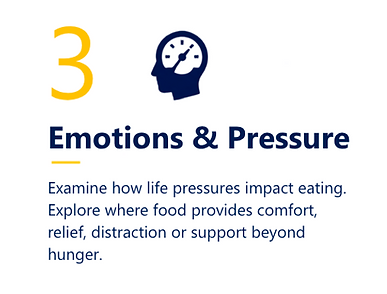


What you'll see
At the end of six weeks, you will know your own Weight Ecosystem.
Not a list of problems, BUT a clearer picture of the forces, experiences and patterns that have surrounded your weight. Things that once seemed separate start to sit together.
You will see the landscape your weight exists within and where your attention needs to go next.
How it works.

The Weight Ecosystem is delivered by email over six weeks.
Each week you receive guided personal writing prompts that help you organise your experiences and observations.
There is no tracking, measuring or food rules.
You are not trying to change anything.
You are expanding what you can see.


FAQ's
What is the purpose of the Weight Ecosystem Diagnostic?
It maps the broader environment shaping your weight, your health, body, emotions, diet history, and relationship with food, so you can see the full context before examining your eating patterns.
_______________________
Why does this diagnostic start before looking at my eating?
Your eating doesn’t operate on its own. It’s shaped by how you define health, how you experience your body, how you respond emotionally, and what dieting has taught you. This diagnostic makes those forces visible first.
_______________________
What will I understand after completing this diagnostic?
You’ll see how your definition of health influences your decisions, how your body experience shapes behaviour, how emotions connect to eating, how dieting has structured your thinking, and how your relationship with food developed over time.
_______________________